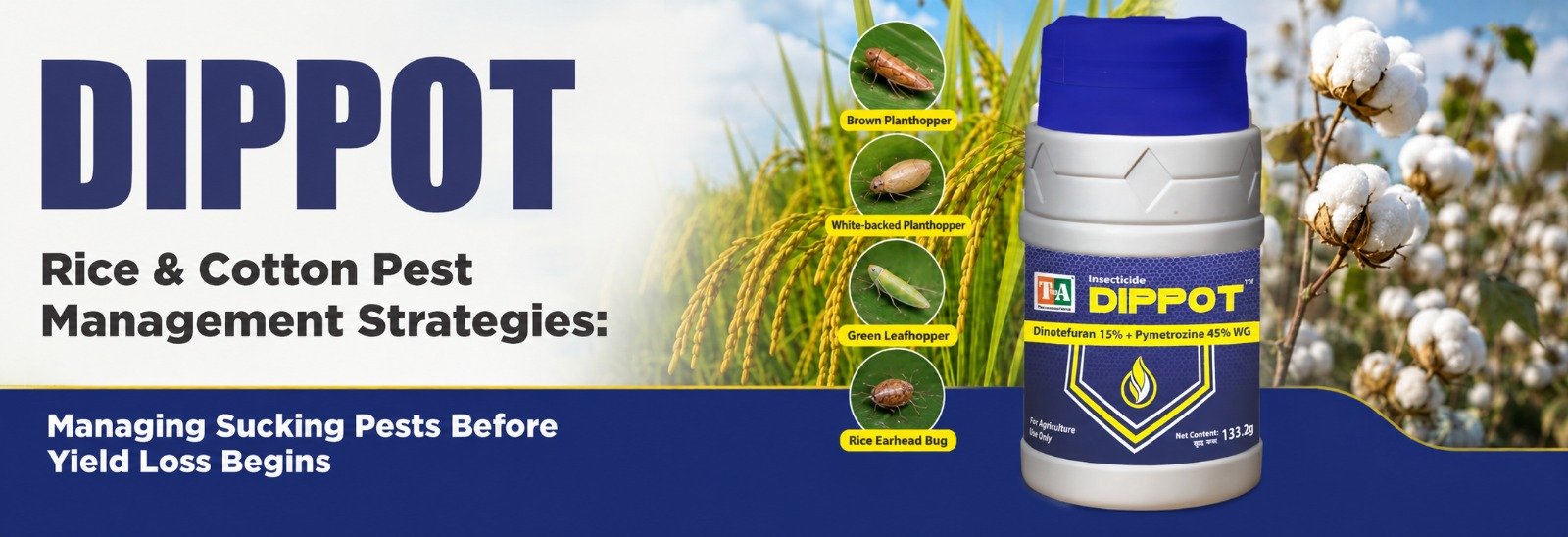
 Rice and cotton are among the most economically important crops, but they are also highly vulnerable to sucking pest infestations throughout their growth cycle. Unlike chewing insects that cause immediate visible damage, sucking pests often remain unnoticed during the early stages of infestation. By the time symptoms become clearly visible, significant physiological damage may already have occurred.
Pests such as brown planthopper (BPH), white-backed planthopper (WBPH), green leafhopper, aphids, jassids, and whiteflies feed by extracting plant sap from leaves and tender tissues. Continuous feeding weakens plant metabolism, disrupts nutrient movement, reduces photosynthetic efficiency, and ultimately affects yield formation.
Under favorable environmental conditions, pest populations can multiply rapidly, making early intervention a critical component of modern crop protection programs.
Understanding Sucking Pest Damage in Rice and Cotton
Sucking insects affect crops differently from defoliators or borers. Instead of destroying plant tissues directly, they weaken the crop gradually by removing nutrients and water from plant cells.
In rice, brown planthopper and white-backed planthopper are among the most destructive pests. Heavy infestations can result in hopper burn, where affected patches of the field turn brown and dry prematurely. These pests also create conditions that reduce grain filling and overall crop productivity.
In cotton, whiteflies, jassids, and aphids continuously feed on young leaves and growing points. Infested plants often show curling, yellowing, stunted growth, and reduced vigor. Whiteflies additionally produce honeydew deposits that encourage sooty mold development, further reducing photosynthetic activity.
Because these pests feed continuously and reproduce rapidly, even a short delay in management can lead to significant population buildup.
Why Dual-Action Chemistry Matters
DIPPOT combines Dinotefuran 15% and Pymetrozine 45% WG, two insecticidal molecules that work through different mechanisms to manage sucking pests effectively.
Dinotefuran belongs to the neonicotinoid group and acts on the insect nervous system. Once absorbed by the pest, it disrupts nerve signal transmission, leading to feeding cessation and mortality. Its systemic movement allows protection of actively growing plant tissues where sucking pests commonly feed.
Pymetrozine works differently. It specifically interferes with feeding behavior in sucking insects. After exposure, pests lose their ability to feed normally, which rapidly reduces crop damage even before mortality occurs.
This combination provides both quick feeding interruption and sustained pest suppression, making it particularly useful during periods of high pest pressure.
How DIPPOT Performs in Field Conditions
In practical field situations, pest management success depends not only on killing insects but also on stopping crop damage quickly.
When sucking pests attack rice or cotton, the greatest economic loss occurs through continuous sap extraction. DIPPOT helps address this challenge by disrupting feeding activity soon after exposure.
As feeding declines, plants experience less physiological stress, nutrient movement improves, and crop growth stabilizes. This is particularly important during active vegetative growth, flowering, and reproductive stages when nutrient demand is high.
The combination also supports management of hidden pest populations that may not be easily visible during routine field scouting.
Importance of Early Intervention
One of the most common mistakes in pest management is waiting until visible damage becomes severe before taking action.
By the time symptoms such as hopper burn, severe leaf curling, or extensive yellowing appear, pest populations are often well established.
Early monitoring and threshold-based application provide significantly better results because:
- Pest populations are easier to suppress
- Crop stress remains limited
- Yield-forming processes remain protected
- Secondary infestations are less likely to develop
Regular field scouting remains one of the most important tools for improving insecticide performance and overall pest management efficiency.
Resistance Management Considerations
Repeated use of the same insecticide chemistry can increase the risk of resistance development in pest populations.
The combination of Dinotefuran and Pymetrozine provides two different modes of action against sucking pests, helping reduce selection pressure compared to relying on a single chemistry.
However, effective resistance management still requires:
- Rotation with different insecticide groups
- Avoidance of unnecessary repeat applications
- Use of recommended dosages
- Integration with broader IPM practices
A structured resistance management program helps preserve product effectiveness over the long term.
Crop Protection Beyond Pest Control
Effective pest management is not only about reducing insect numbers. The larger objective is protecting crop physiology during critical growth stages.
When sucking pest pressure remains under control:
- Photosynthetic activity is maintained
- Nutrient transport remains efficient
- Plant vigor improves
- Flowering and reproductive development remain protected
- Yield formation proceeds more uniformly
This is particularly important in cotton and rice, where even moderate pest pressure during sensitive growth stages can significantly influence final productivity.
Integrated Pest Management Approach
Modern pest management programs combine chemical control with agronomic practices to achieve sustainable results.
Important supporting practices include:
- Regular field scouting
- Balanced fertilizer application
- Timely irrigation management
- Removal of alternate host plants
- Conservation of beneficial insects where possible
When integrated with these practices, insecticide applications become more effective and economically efficient.
Conclusion
Rice and cotton crops remain highly vulnerable to sucking pests throughout their growth cycle. Because these insects feed continuously and multiply rapidly, early intervention is essential to prevent physiological stress and yield loss.
DIPPOT (Dinotefuran 15% + Pymetrozine 45% WG) combines two complementary modes of action that help suppress sucking pest populations, interrupt feeding activity, and support healthier crop development during critical growth stages.
When incorporated into a structured pest management program, it contributes to improved crop protection, better plant health, and more consistent yield performance under field conditions.