
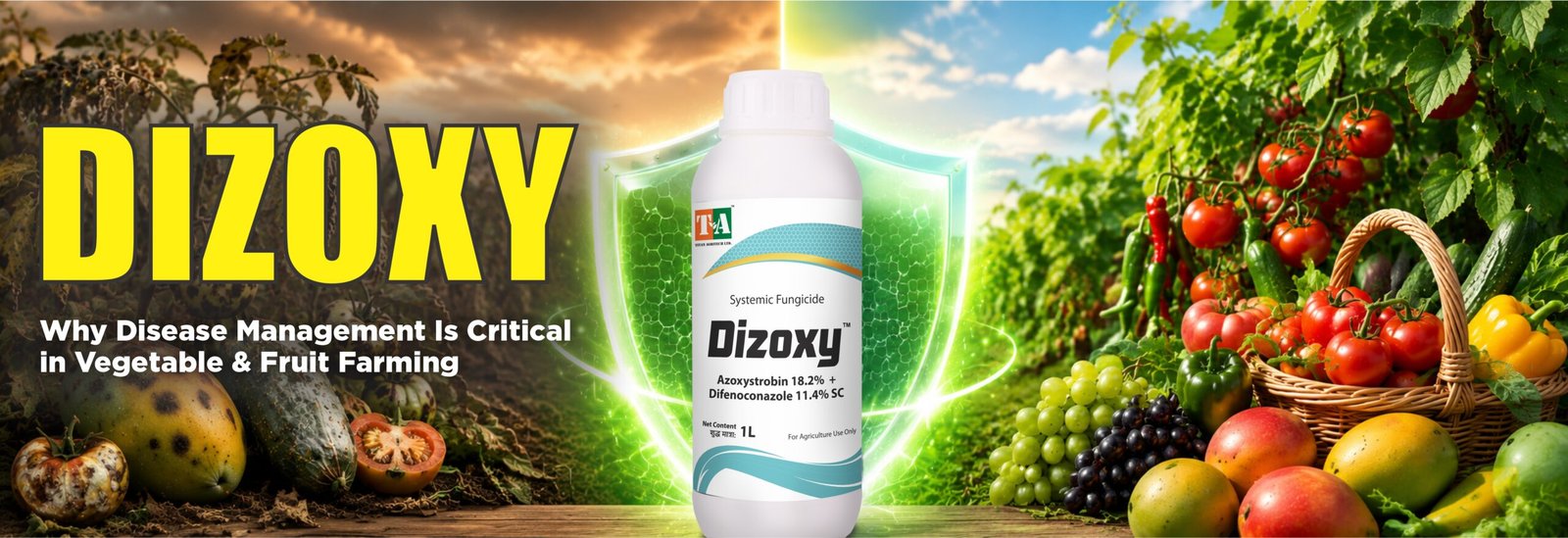
Vegetable and fruit crops remain highly vulnerable to fungal diseases throughout their growth cycle because of continuous irrigation, dense canopy formation, fluctuating temperatures, and prolonged humidity inside the crop environment. Unlike cereal crops, horticultural crops produce tender foliage, flowers, and fruits that are highly sensitive to fungal infection, especially during reproductive stages.
Diseases such as early blight, powdery mildew, downy mildew, anthracnose, fruit rot, leaf spots, and dieback can spread rapidly under favorable weather conditions. These infections not only reduce plant vigor but also directly affect flowering, fruit setting, fruit quality, shelf life, and overall marketable yield.
In commercial horticulture, disease management is no longer limited to controlling visible symptoms. Modern crop protection focuses on preventive disease suppression, resistance management, and maintaining healthy plant physiology throughout the cropping cycle.
Understanding the Role of DIZOXY in Disease Management
DIZOXY (Azoxystrobin 18.2% + Difenoconazole 11.4% SC) is a combination fungicide designed to provide broad spectrum disease management in vegetable and fruit crops. The formulation combines two different fungicidal chemistries that work through separate biochemical pathways inside fungal pathogens.
Azoxystrobin belongs to the strobilurin group of fungicides and primarily acts by inhibiting mitochondrial respiration in fungal cells. It disrupts energy production inside fungal mitochondria, preventing spore germination and fungal growth. This provides strong preventive protection against developing infections.
Difenoconazole belongs to the triazole group and acts by inhibiting ergosterol biosynthesis, which is essential for fungal cell membrane formation. Its systemic movement inside plant tissues helps suppress active fungal development and restrict disease spread within infected areas.
The combination of preventive and curative activity makes DIZOXY particularly useful in crops where disease pressure remains continuous during vegetative growth, flowering, and fruit development stages.
Why Combination Fungicides Are Important in Horticultural Crops
Single chemistry fungicides often fail to provide long term disease suppression under heavy fungal pressure because pathogens may gradually develop resistance against repeated exposure to the same mode of action.
Combination fungicides help improve disease management by exposing pathogens to multiple biochemical targets simultaneously. This approach not only broadens the disease control spectrum but also helps delay resistance development in fungal populations.
In vegetable and fruit crops where multiple fungal pathogens may remain active together, dual action fungicides support more consistent disease suppression across different crop stages.
Major Disease Challenges in Vegetable & Fruit Crops
Fungal diseases in horticultural crops generally increase during periods of high humidity, intermittent rainfall, excess vegetative growth, and restricted air circulation within the canopy.
In vegetable crops, diseases such as early blight, powdery mildew, downy mildew, anthracnose, and leaf spot complexes can rapidly reduce photosynthetic area and weaken plant productivity.
Fruit crops often face severe disease pressure during flowering and fruit maturity stages. Anthracnose, fruit rot, powdery mildew, and leaf spot diseases directly affect fruit appearance, firmness, transportability, and storage quality.
Disease infection during flowering is considered particularly damaging because it interferes with pollination, fruit setting, and early fruit retention.
Importance of Preventive Fungicide Scheduling
One of the most common reasons behind severe disease outbreaks is delayed fungicide application. In many fields, fungicide spraying begins only after visible symptoms spread across the crop canopy. By this stage, fungal colonization inside plant tissues may already be extensive.
Preventive fungicide scheduling helps reduce primary fungal establishment before infection becomes severe. Early protection lowers spore multiplication and minimizes secondary disease spread during later crop stages.
In high value horticultural farming, preventive disease management generally provides better long term control compared to repeated curative spraying after heavy infection.
Critical Crop Stages for Disease Protection
Early Vegetative Stage
Young leaves and actively growing tissues remain highly susceptible to fungal penetration because of softer epidermal layers and rapid cell division. Protective fungicide coverage during this phase reduces early inoculum establishment.
Pre Flowering Stage
As canopy density increases, internal humidity also rises. Reduced air movement creates ideal conditions for fungal spore germination and disease spread. Systemic fungicide protection becomes increasingly important during this phase.
Flowering & Fruit Setting Stage
Flowering remains one of the most sensitive stages in horticultural crops. Fungal infection during flowering directly affects pollination efficiency, fruit set, and fruit retention.
Maintaining disease free foliage and reproductive structures during this stage supports healthier crop development and better fruit initiation.
Fruit Development Stage
Developing fruits remain vulnerable to surface infections, fruit rot pathogens, and storage related diseases. Consistent disease protection during this phase helps maintain fruit quality, appearance, and shelf life.
Physiological Advantages of Healthy Foliage
Disease free foliage contributes directly to sustained photosynthetic activity and improved carbohydrate production inside the plant system. Healthy leaves continue supporting nutrient translocation toward flowers and developing fruits throughout the reproductive cycle.
Strobilurin based fungicides are also associated with improved green leaf retention and delayed leaf senescence under protected crop conditions. Maintaining active foliage for longer duration supports better crop uniformity and yield stability.
Resistance Management in Fungicide Programs
Fungal pathogens possess high adaptability and reproductive capacity, which increases the risk of fungicide resistance under continuous exposure to single chemistry products.
Resistance management strategies therefore remain essential in commercial horticulture. Rotational use of fungicides belonging to different FRAC groups, maintaining recommended spray intervals, and avoiding repeated underdosing help preserve fungicide effectiveness over longer periods.
Combination fungicides such as DIZOXY support resistance management programs by targeting pathogens through multiple biochemical mechanisms simultaneously.
Importance of Proper Spray Coverage
Fungicide efficacy depends heavily on spray quality and canopy penetration. Dense crop foliage often prevents proper spray deposition on lower leaf surfaces where fungal infection commonly begins.
Uniform coverage across leaves, stems, flowers, and developing fruits improves disease suppression efficiency. Proper water volume, nozzle selection, droplet distribution, and spraying under suitable weather conditions significantly influence final fungicide performance.
Integrated Disease Management Approach
Effective disease management depends on integrating fungicide application with overall crop management practices. Balanced fertilization, proper irrigation scheduling, field sanitation, crop rotation, and canopy management all contribute toward reducing disease pressure.
Excess nitrogen fertilization may increase succulent vegetative growth, creating favorable conditions for fungal development. Similarly, prolonged moisture retention inside the canopy accelerates pathogen multiplication.
Integrated crop management therefore focuses on maintaining both crop health and environmental balance within the production system.
Conclusion
Vegetable and fruit crops remain under continuous fungal pressure because of their long cropping duration, dense canopy structure, and high moisture exposure. Under such conditions, preventive disease management becomes essential for protecting crop productivity, fruit quality, and market value.
DIZOXY (Azoxystrobin 18.2% + Difenoconazole 11.4% SC) supports modern disease management programs through its dual mode of action combining preventive and systemic fungicidal activity. The formulation helps suppress fungal development, protect actively growing plant tissues, and support healthier crop growth during critical developmental stages.
When integrated with balanced nutrition, proper irrigation management, field sanitation, and timely spray scheduling, structured fungicide programs can help farmers maintain better disease control, improved crop quality, and more stable commercial yields in vegetable and fruit cultivation.