
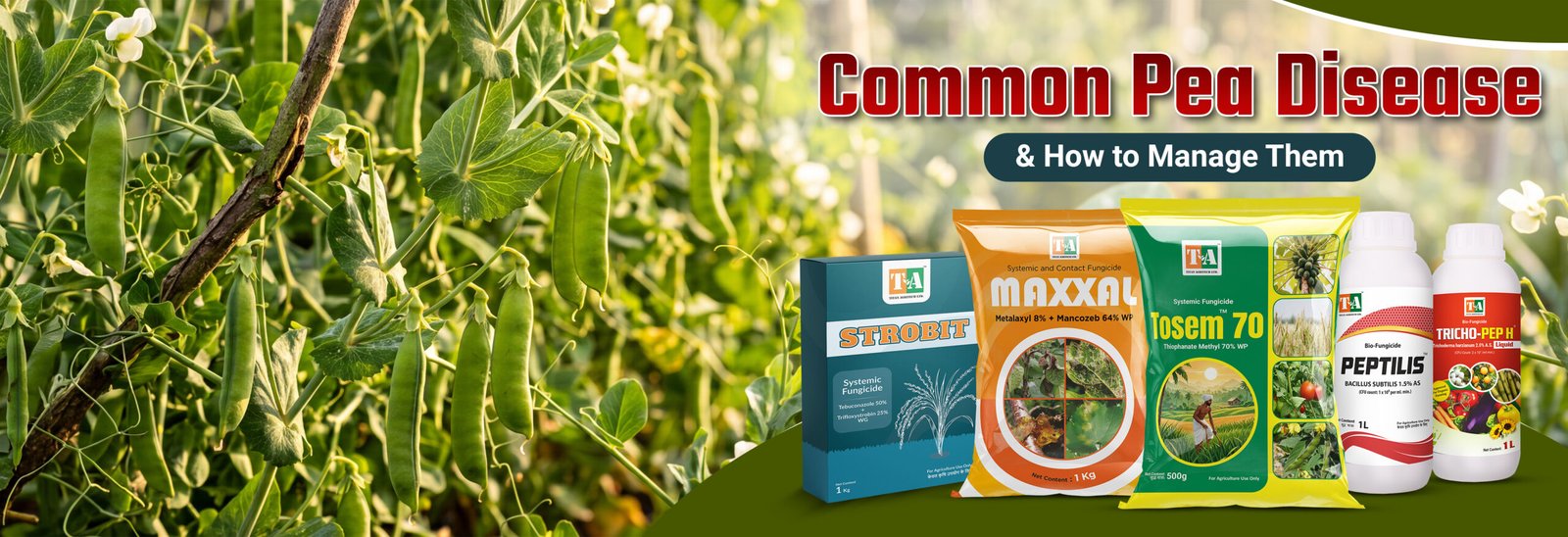
How to Manage Common Pea Diseases
Peas are a winter vegetable and pulse crop grown throughout many regions of the Indian subcontinent. They are an invaluable source of nutrition, providing a rich source of protein in the seeds, improved soil fertility, and a nutritious green vegetable. They are extensively grown as a market vegetable and pulse in Punjab, Uttar Pradesh, Bihar & Himachal Pradesh. Peas can be tricky to grow, as they are prone to diseases occurring during growth. This can result in issues with growth, flowering, and podding.
As the seasons progress, they initially appear to be healthy. Over time, they will start to show symptoms of yellowing, spotting, and white fluffy patches. Peas showing symptoms means that they are suffering from a fungal or bacterial disease. This will cause issues on the leaves and pods, but some will attack the roots. This will cause damage to the vascular tissues and lead to death. Resulting in issues with water and nutrients.
Common Pea Diseases
Powdery mildew, downy mildew, rust, fusarium wilt, and root rot are all common diseases of peas. Depending on the variety, soil moisture levels, and weather during the season.
Symptoms and Control of Common Diseases
1. Powdery Mildew
A fairly common fungal disease caused by Erysiphe pisi. Usually occurs later in the crop and can affect leaves, stems, and pods.
Symptoms
- White powdery patches appear on the leaves.
- Slow spread of the fungus on leaves and stems.
- Yellowing will occur on the leaves and may begin to die prematurely.
- Severe cases can impact the quality of the pods.
Control
- Using resistant/tolerant varieties.
- Don’t overapply nitrogen or allow crops to become too dense.
- Monitor the leaves during flowering and podding.
- Thiophanate Methyl 70% (TOSEM 70) – A systemic fungicide to control infestation by powdery mildew.
- Application rate: 250g/acre.
2. Downy Mildew
Downy mildew is caused by Peronospora viciae. It tends to occur in the coolest conditions with pressure. Especially if there is prolonged wetting of the plant.
Symptoms:
- Pale green/yellow patches on the top of the leaf.
- Gray/purple filaments or fungal growth on the underneath of the fallen leaves.
- Stunted growth and lack of vigor on affected plants.
- Most severe in heavily infected plants with red coloration. Affects flowering and podding.
Control:
- Avoid overhead lighting during periods that will not favor disease.
- Install full drainage systems in the field. Ensure plants are well spaced.
- If possible, remove severely infected plant material.
- Metalaxyl 8% + Mancozeb 64% (MAXXAL) – Systemic and contact fungicide to control infestation by downy mildew.
- Application rate: 1,000g/acre.
3. Rust disease
Pea rust is a fungal disease caused mainly by the fungus Uromyces pisi along with other rust pathogens. This mainly affects the foliage and can reduce photosynthesis within the plant if severe.
Symptoms:
- Small pale spots appear on the leaves.
- Spores are reddish-brown with orange-brown pustules on the infected plant.
- Spore dust will begin to release from the pustules as the spores mature.
- Leaves will become dry and will begin to die prematurely in heavily infected areas.
Control:
- Use resistant varieties if available.
- Burn off infected parts.
- Don’t overapply nitrogen.
- Tebuconazole 50% + Trifloxystrobin 25% (STROBIT) – Dual mode of action to control infestation by rust. The dual mode of action provides protection of healthy foliage whilst controlling fungal infection. Improves crop vigor.
- Application rate: 100g/acre.
4. Fusarium Wilt
A serious soil-borne disease. Fusarium wilt is caused by Fusarium oxysporum f. sp. pisi. It infects the roots and spreads to the vascular tissue, which is responsible for watering and distributing nutrients around the plant.
Symptoms:
- Yellowing begins on the lower leaves.
- The plant becomes floppy and wilts.
- Brown discoloration can be found when cutting into the vascular tissue of the exposed stems.
- Severely infected plants may fully wilt and become floppy.
Control:
- Use wilt-resistant varieties for this area.
- Practice deep crop rotation. Don’t grow any host crops in the field for several years.
- Use fresh seeds with recommended seed treatments.
- Bacillus subtilis 1.5% (PEPTILIS)—Biological control of any soil-borne fungal issues. Provides a healthier root zone.
- Application rate: 2 liters/acre.
5. Root Rot
This disease affects the roots of the pea plant. Can be caused by a range of soil-borne pathogens, including Fusarium species and Rhizoctonia solani. Can occur at various times during seedling and crop development.
Symptoms:
- Brown/black lesions on the roots.
- Soft rot.
- Yellowing, stunting, and wilting.
- Can cause seedlings to die in severe cases, causing gaps in the field.
Control:
- Ensure good drainage in the field.
- Don’t overwater.
- Use quality seeds with recommended seed treatments.
- Trichoderma harzianum 2.0% (TRICHO-PEP H LIQUID)—Application of good fungi to the root zone to biologically control soil-borne pathogens. Leads to a healthier root system and improved plant establishment
- Application rate: 1 litre/acre.
Prevention of Diseases
Alongside disease-specific controls, a few agricultural controls can be used to reduce the incidence of disease.
- Use healthy and certified seeds. If seed-borne diseases are an issue in the area, use appropriate registered seed dressings.
- Don’t grow peas in the same field every year. Rotate with a suitable non-host crop to reduce soil-borne pathogens (especially wilt and rot pathogens).
- Ensure plants are well watered but not waterlogged. This will ensure good root development and reduce many root diseases.
- Apply the correct amount of fertilizer depending on soil type and plant requirements. Too much nitrogen can cause lush growth.
- Remove any infected plant material. Volunteer pea plants should be controlled.
- Regularly monitor crops. Check the leaves, stems, roots, and pods for symptoms. Early detection of symptoms will allow farmers to apply the correct controls.
When to Treat Pea Diseases?
As soon as symptoms begin to appear in the field, implement disease controls. Don’t ignore white fluffy growth, chlorotic leaves, rust-colored pustules, water-soaked lesions, and unknown wilting.
However, not every symptom is specific to a certain disease. Nutrient deficiencies and environmental stress can cause similar symptoms. Sometimes wilting can be caused by Fusarium infection, root rot, and low soil moisture. If unsure what the disease is, closely examine the effected parts of the plant. Get professional or lab confirmation. Once you know what the cause of the disease is, apply the correct treatment. Don’t use the same fungicide for different diseases.