
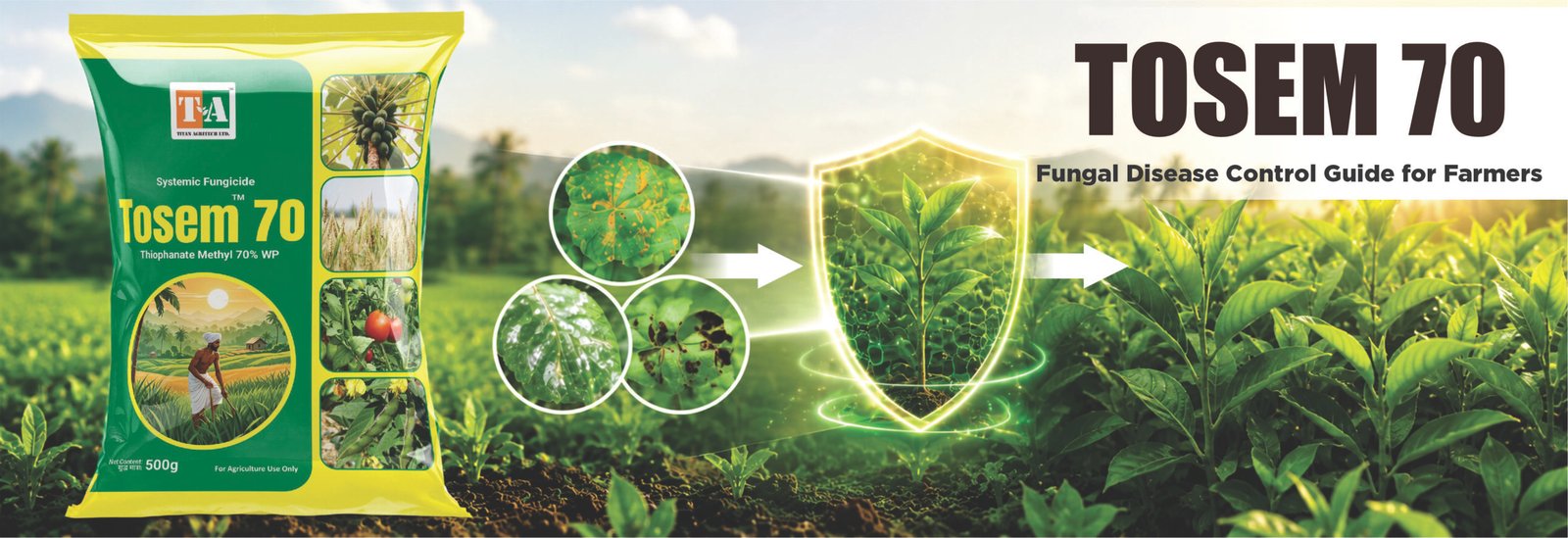
Fungal diseases are among the most common reasons for yield and quality losses across agricultural crops. Whether it is cereals, vegetables, fruits, pulses, or plantation crops, fungal pathogens can attack plants at almost every growth stage. In many cases, disease symptoms become visible only after the infection has already established itself within plant tissues, making timely management essential for protecting crop productivity.
Environmental conditions such as high humidity, frequent rainfall, dew formation, and moderate temperatures create ideal conditions for fungal growth and spread. Once favorable conditions develop, diseases can move rapidly through a field, affecting leaves, stems, flowers, fruits, and roots. If left unmanaged, fungal infections can reduce photosynthetic activity, weaken plant vigor, interfere with nutrient movement, and significantly impact final yield.
This is why fungicides continue to play an important role in modern crop protection programs, particularly when integrated with good agronomic practices and disease monitoring.
What is TOSEM 70?
TOSEM 70 contains Thiophanate Methyl 70% WP, a systemic fungicide widely used for the management of various fungal diseases across multiple crops.
Unlike contact fungicides that remain on the plant surface, Thiophanate Methyl is absorbed by plant tissues and moves within the plant system. This systemic activity allows it to provide protection beyond the immediate spray deposit and helps suppress fungal development within plant tissues.
Its broad applicability has made it an important tool in disease management programs for field crops, horticultural crops, and plantation crops where fungal pressure remains a recurring challenge.
How Thiophanate Methyl Works
After application, Thiophanate Methyl is absorbed into plant tissues and converted into its biologically active form. The active compound interferes with fungal cell division by disrupting microtubule formation, an essential process required for fungal growth and reproduction.
Without normal cell division, the fungus loses its ability to develop and spread effectively within plant tissues.
This mode of action helps slow disease progression, restrict pathogen development, and protect healthy plant tissues from further infection.
Because of its systemic movement, the fungicide can reach areas that may not have received direct spray coverage, improving overall disease management effectiveness.
Importance of Preventive Disease Management
One of the most common mistakes in disease control is waiting until severe symptoms appear before taking action.
By the time extensive lesions, blights, rots, or defoliation become visible, fungal colonization may already be well established within the crop. At this stage, complete recovery becomes difficult because damaged plant tissues cannot be restored. Preventive or early-stage fungicide application generally provides better results because it reduces pathogen establishment before widespread infection occurs.
Regular field scouting, disease forecasting, and timely intervention are therefore critical components of successful disease management programs.
Common Situations Where Disease Pressure Increases
Fungal diseases often become more aggressive when environmental conditions favor pathogen growth.
Dense crop canopies with limited air circulation tend to retain humidity for longer periods. Excessive irrigation, prolonged rainfall, and heavy dew formation also create conditions that support spore germination and infection. Similarly, excessive nitrogen fertilization can stimulate lush vegetative growth, increasing canopy humidity and making crops more vulnerable to disease outbreaks.
Understanding these risk factors helps farmers make better decisions regarding fungicide timing and disease prevention strategies.
Protecting Plant Health and Yield Potential
The primary objective of disease management is not simply eliminating pathogens. The larger goal is maintaining healthy plant function throughout the growing season.
When fungal diseases are effectively controlled, crops maintain greener foliage, stronger stems, healthier reproductive structures, and improved nutrient utilization.
Healthy leaves continue producing carbohydrates through photosynthesis, which are then transported to developing grains, fruits, pods, or other harvestable plant parts.
This directly contributes to better crop growth, improved quality, and more stable yield formation.
Resistance Management Considerations
Like all crop protection products, fungicides should be used responsibly to preserve their long-term effectiveness.
Continuous use of the same fungicide group may increase the risk of resistance development in fungal populations. Over time, resistant pathogen strains can reduce the effectiveness of disease control programs.
To minimize this risk, fungicides should be incorporated into a broader resistance management strategy that includes:
1. Proper spray timing.
2. Recommended application rates.
3. Rotation with fungicides having different modes of action.
4. Integration with cultural and agronomic disease management practices.
A structured approach helps maintain disease control effectiveness while supporting sustainable crop production.
Role in Integrated Disease Management
Successful disease control rarely depends on fungicides alone.
Integrated Disease Management (IDM) combines chemical protection with agronomic practices that reduce disease pressure naturally. These include:
Using healthy planting material.
- Crop rotation.
- Field sanitation.
- Balanced fertilization.
- Proper irrigation management.
- Improved air circulation within the crop canopy.
- Disease monitoring and forecasting.
When fungicide applications are combined with these practices, overall disease management becomes more effective and economically sustainable.
Conclusion
Fungal diseases remain one of the most significant threats to agricultural productivity because they can affect crops at every stage of growth. Effective management requires timely intervention, proper disease monitoring, and the use of reliable fungicide solutions that help protect plant health before severe damage occurs.
TOSEM 70 (Thiophanate Methyl 70% WP) provides systemic disease protection by interfering with fungal growth and limiting disease progression within plant tissues. Its systemic activity supports broader plant protection and helps maintain healthy crop development under disease-prone conditions.
When integrated into a comprehensive disease management program, TOSEM 70 helps farmers protect crop vigor, preserve yield potential, and improve overall crop performance throughout the growing season.