
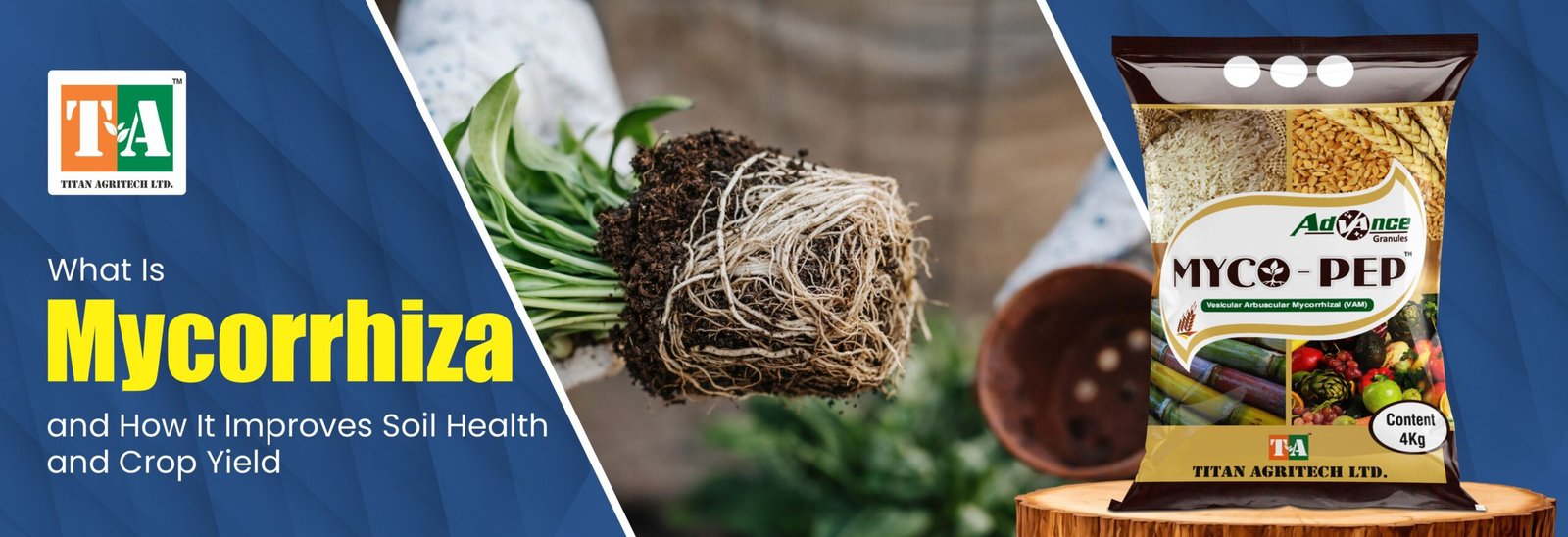
When a farmer talks about good soil most of the time we hear words like soil texture, organic matter, water holding and moisture. All this is correct but one important thing is mostly ignored and that is soil life. Soil is not dead, it is alive and inside this soil there is a whole system working silently for the crop. One of the strongest supporters in this system is mycorrhiza.
Mycorrhiza is not a chemical and it is not something man made. It is a natural relationship between fungus and plant roots. This system was present in nature even before farming started. Crops survived without urea DAP or chemicals only because soil biology was active.
What is mycorrhiza?
The word mycorrhiza comes from two Greek words myco means fungus and rhiza means root. In simple language mycorrhiza is a good fungus which lives with plant roots.
This relationship is very old. It existed much before fertilizers, pesticides and modern agriculture came. In natural forests you will always find strong plants even without fertilizers and the reason is healthy soil biology including mycorrhiza.
When mycorrhiza spores touch young crop roots they start attaching to them. After that they form very thin thread type structures called hyphae. These threads go deep and wide in the soil much further than normal roots can go. Because of this the fungus works like an extra root system for the crop.
The plant gives sugar to the fungus which is made during photosynthesis. In return the fungus helps the plant take water and nutrients from soil. Both help each other so this relationship is called symbiotic.
How mycorrhiza improves soil structure?
One big benefit of mycorrhiza is soil structure improvement. Over time soil becomes hard or loose because of continuous farming and chemical use.
The hyphae of mycorrhiza bind soil particles together. Because of this soil becomes more stable and porous. Air movement improves and roots get space to grow.
When there is heavy irrigation or rain water goes inside soil instead of flowing out. During dry days soil holds moisture for a longer time.
Mycorrhiza also produces a sticky substance called glomalin. This helps in increasing soil organic carbon and water holding capacity. This is very useful in sandy soil and light soil where water loss is fast.
Role of mycorrhiza in nutrient uptake
Phosphorus is the nutrient most affected by mycorrhiza. Phosphorus does not move freely in soil. Even after applying fertilizer most of it becomes fixed.
Because mycorrhiza hyphae go far in soil they can reach this fixed phosphorus. They absorb it and give it directly to plant roots. This increases phosphorus use efficiency.
Apart from phosphorus, mycorrhiza also helps in uptake of micronutrients like zinc iron , copper and manganese. These nutrients are small in quantity but very important for flowering grain filling and enzyme activity.
That is why crops look healthier even when the fertilizer dose is the same.
Effect on root growth and early crop stage
Crops which have mycorrhiza develop better roots. Roots become more branched and root hairs increase. Overall root surface area becomes bigger.
In direct sown crops this helps in uniform germination and early growth. In transplanted crops like vegetables, fruits and plantation crops mycorrhiza reduces transplant shock.
Healthy roots mean better nutrient flow, stronger plants and stable growth till harvest.
Mycorrhiza and water stress
Today water problems are common. Sometimes irrigation is delayed, sometimes rain is uneven.
Mycorrhiza helps plants handle this stress. Because fungus covers a larger soil area plants can take moisture from deeper soil.
During short dry periods crops remain greener and recover faster once water is available. Mycorrhiza does not replace irrigation but it helps plants use water better.
Impact on yield and crop quality
Yield improvement with mycorrhiza does not come suddenly. It comes slowly but stays for a long time.
Crops show better flowering and fruit setting. In cereals grain filling improves. In pulses and oilseeds except mustard and brassica crops pod development becomes better. In vegetables and fruits size, color and uniformity improves.
Quality also improves like firmness, shelf life and overall crop health.
How farmers should use mycorrhiza
Mycorrhiza should be applied at sowing or transplanting. Young roots are important for colonization.
It can be mixed with FYM or compost and applied in soil. It can also be used as seed treatment or root dipping.
After application soil should have moisture. Very high phosphorus dose and unnecessary fungicide sprays should be avoided as they reduce fungal activity.
Conclusion
Mycorrhiza is not a quick result product. It works slowly and naturally.
Farmers who only look for instant results may ignore it but farmers who think long term always benefit. With rising input cost and soil problems natural systems are becoming necessary.
Mycorrhiza helps reduce fertilizer dependency and improves soil health. Strong soil gives strong roots and strong roots give stable yield.
FAQ
Is mycorrhiza a fertilizer?
No, it is not a fertilizer. It helps plants absorb nutrients already present in soil.
Can mycorrhiza be used in all crops?
Most crops respond well cereals pulses vegetables fruits spices plantation crops. Mustard and other brassica crops do not respond.
Best time to apply mycorrhiza?
At sowing or transplanting.
Can it be mixed with FYM?
Yes, well decomposed FYM or compost is good for it.
Does chemical fertilizer affect it?
Balanced use is fine but excess phosphorus and fungicides reduce activity.
How long it remains active?
As long as living roots are present. Regular use builds population.
Can it replace phosphorus fertilizer?
No but it improves efficiency and helps reduce dose slowly.
Is it safe?
Yes, completely safe for soil and environment.
When results are visible?
Root effect starts early crop response seen in a few weeks soil benefit seen over seasons.