
For a farmer, the real power of a crop does not begin with green leaves or heavy fruits.
It always starts underground. Indian farming has survived for generations because of
fertile soil, but the way soil has been handled in the last few decades has changed a lot.
After the Green Revolution, chemical fertilizers became the backbone of higher
production. At that time, applying more fertilizer meant a better yield, and the response
from the crop was fast and visible.
Slowly, this thinking started creating problems. The same fields that once reacted
quickly began to lose that response. Fertilizer quantities kept increasing, expenses went
up, but yield stopped improving at the same pace. Many farmers started noticing that
their soil was turning hard, water was not soaking in properly, and crops looked tired
even after full nutrient application. This made one thing very clear. You cannot expect
long-term yield if the soil keeps getting weaker every year.
This is where biological fertilizers come into the picture in a very natural way. They do
not force the plant to grow. Instead, they work silently in the soil, improving how the soil
functions. Their strength lies in helping crops absorb nutrients that are already present
while slowly restoring soil life. In this way, the field does not just perform for one season;
it stays productive for the seasons that follow.
What is Biological Fertilizers
Biological fertilizers are basically made from useful living microorganisms. These
microbes stay alive in the soil and especially near the plant roots, because that area is
where most nutrient movement happens. Unlike chemical fertilizers, they do not add
nutrients in big amounts directly to the crop. Their main job is to make the nutrients
already present in the soil available to the plant.
Most soils already have nitrogen, phosphorus, potassium, and many micronutrients
inside them. The problem is, a large part of these nutrients stays locked in complex
forms. Roots cannot take them up on their own. Biological fertilizers handle this
naturally. The microorganisms slowly convert these locked nutrients into forms that
roots can absorb easily. Because of this, nutrient use improves without harming soil
structure or disturbing the natural microbial balance.
In Indian agriculture, farmers commonly use biological fertilizers like Nitrogen fixing
Bacteria, Phosphorus Solubilizing Bacteria, Potassium Mobilizing Bacteria, Mycorrhizal
Fungi, and Bio NPK combinations. These products work quietly in the background, not
overnight, but they support healthier crops and better soil over time.
Why Farming Needs Biological Fertilizers
Soil is not just a support for plants; it is a living system. Healthy soil is full of
microorganisms that break down organic matter, move nutrients in the soil, and help
roots grow properly. When chemical fertilizers are used continuously, especially without
adding organic matter, this natural activity slowly reduces. Over time, the soil becomes
tight, less active, and does not respond the way it used to.
Many farmers feel this problem in daily farming. Fertilizers do not show the same result,
water requirements increase, and crop growth becomes uneven across the field.
Biological fertilizers help in correcting this situation. They bring back useful microbes
and improve activity around the root zone. Once soil biology improves, crops start
performing better even with the same fertilizer dose, sometimes with less also.
From the cost side, Biological fertilizers also make sense. By improving how efficiently
fertilizers are used, they help farmers control rising input expenses. This makes farming
more balanced, both for the soil and for the farmer’s pocket.
Benefits of Using Biological Fertilizers
Better Nutrient Availability
Nitrogen-fixing bacteria take nitrogen from the air and convert it into a form plants can
use. In the same way, Phosphorus Solubilizing Microbes release phosphorus that stays
locked in the soil for a long time. Because of this, nutrients become available when the
crop actually needs them, and losses through leaching or fixation are reduced.
Stronger Root System
Mycorrhizal fungi and other beneficial bacteria help roots spread deeper and wider in
the soil. When the root system is strong, plants can absorb more water and nutrients.
This really helps the crop during dry periods or when nutrients are under stress.
Reduced Fertilizer Dependency
As nutrient use efficiency improves, the dependence on chemical fertilizers slowly
comes down. This change does not happen in one season. But with regular use,
farmers start noticing better crop response even with the same or slightly lower fertilizer
dose.
Improved Crop Health
When nutrition stays balanced, plants grow stronger. Crops look more uniform and
handle stress conditions like uneven moisture or nutrient imbalance much better.
Long-Term Soil Fertility
Biological fertilizers do not damage soil structure. Instead, they support the breakdown
of organic matter and help maintain soil fertility over many cropping seasons, not just
one.
Crop Impact of Biological Fertilizers
Field Crops
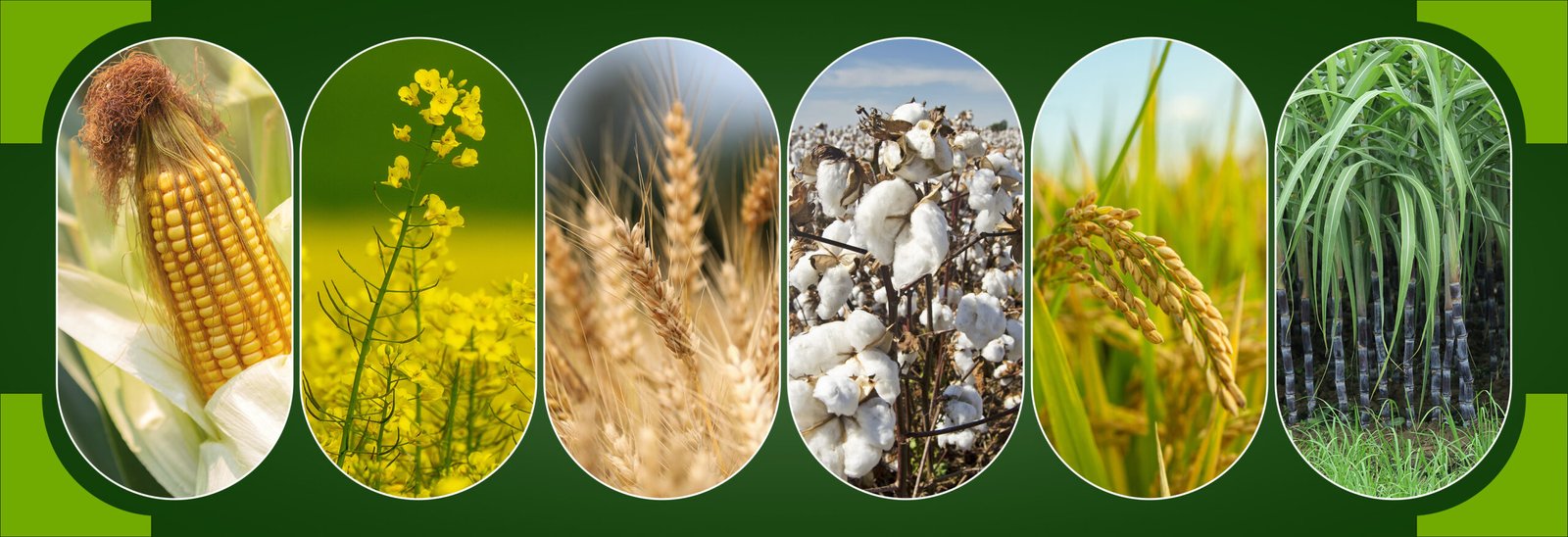
In wheat, rice, maize, and cotton, roots grow better, and plants pick nutrients more
evenly. The crop stand looks more uniform, not perfect but clearly improved.
Pulses and Oilseeds
Nitrogen-fixing biofertilizers help nodules form properly in pulses. Because of this,
flowering and pod setting become better. Oilseeds also show better growth at early
stages.
Vegetables
Vegetable crops respond fast in most cases. Roots get stronger, nutrient use improves,
and produce quality becomes better overall.
Fruit Crops
In orchards, results come slowly. Soil stays productive for a longer time, flowering is
more regular, and fruit size and quality improve little by little.
Conclusion
Biological fertilizers are not a quick fix. They work as long-term support for both soil and
crop. When they are used regularly, nutrient use improves, roots become stronger, and
soil biology slowly comes back. Because of this, farmers can maintain stable yields
without harming the base of their land.
Soil that stays healthy keeps giving results year after year. Biological fertilizers help in
protecting this strength, while also keeping farming practical from both an economic and
an agronomic point of view.
Frequently Asked Questions (FAQs)
Are Biological Fertilizers same as organic manure
No, both are different. Organic manure mainly adds organic matter and a small amountof nutrients to the soil. Biological fertilizers contain living microorganisms. These
microbes help plants use nutrients that are already present in the soil. For best results, both are usually used together.
Can Biological fertilizers fully replace Chemical fertilizers
Not immediately. Biological fertilizers are meant to improve soil health and nutrient
efficiency. With regular use, Chemical fertilizer doses can be reduced slowly over time.
How soon can results be seen
Some improvement in root growth and plant vigor can be seen within a few weeks. But
soil fertility improvement becomes more visible after continuous use for more than one
season.
Are Biological fertilizers safe for all crops
Yes, when applied as per recommendation, they are safe for all types of crops and do
not damage plants.
Can Biological fertilizers be used along with pesticides
Direct mixing with chemical fungicides or bactericides should be avoided. It is better to
keep a gap of around five to seven days between applications.