
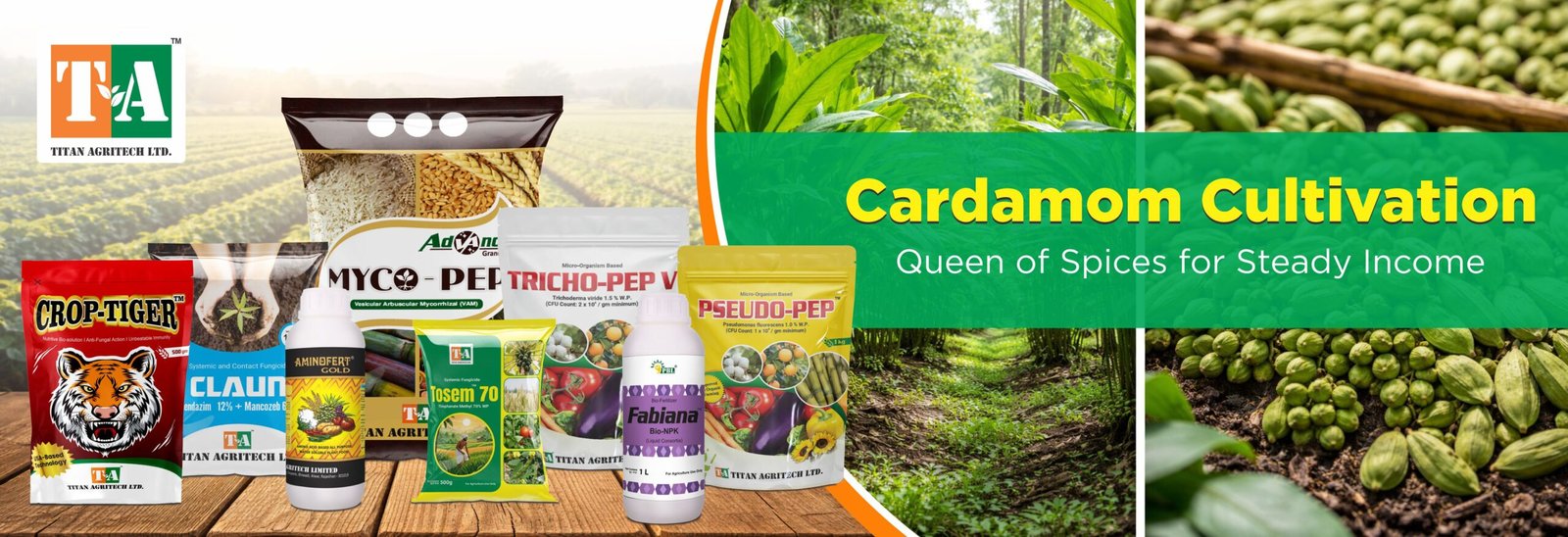
Cardamom is called the queen of spices, not without reason, its aroma and taste is very famous. Also it has some medicinal properties, so not only in India but also other countries demand is high. If a farmer grows it properly, cardamom farming can give long term income. It needs some care and attention at the beginning, but after plants settle, they give yield for many years.
Kerala, Karnataka and Tamilnadu are the main states where cardamom grows well. A hilly area with some shade is the best place for cardamom farming.
Land and Climate
Cardamom likes cool and humid climates, too much heat or frost is not good. The best temperature is 18 to 30°C and rainfall 1500–2500 mm yearly, these conditions support successful cardamom farming.
Soil should be well drained, loamy or laterite, and with organic matter. pH around 5.0–6.5 is good. Heavy soil or water logged soil can cause root rot.
Land Preparation and Plant Choice
Land prep:
Clean the field well before planting, remove bushes, weeds and old roots. On slope, make contour bunds, prevent soil erosion.
Plant choice:
Select healthy and disease free plants. Roots are strong and leaves green. Weak plants fail to grow well.
Pit Making and Planting
Make pits 45 × 45 × 45 cm, give enough space for roots. Fill with top soil and decomposed manure, it makes soil loose and give initial nutrients.
Use TRICHO-PEP V to reduce fungus in soil and protect roots. Giving Myco-Pep helps roots grow strong and take water and nutrients better.This keeps plants healthy and gives better yield in cardamom farming.
Planting Time
Best planting is during monsoon, June to August, because soil has enough moisture. Keep 2 × 2 meter distance between plants, so sunlight and air are proper. After planting, do light water for roots to settle well.
Irrigation
Cardamom needs regular moisture but water logging is bad. During rain, drainage must be good. In summer, irrigate every 7–10 days. Drip irrigation is best, saves water and keeps moisture balanced in cardamom farming.
Fertilizer / Nutrition
Since cardamom is a long term crop, balanced nutrition is a must.
- Crop Tiger – gives plant strength
- Fabiana – improve nutrient in soil
- Myco-Pep – helps root growth
Give fertilizers in 2 parts, first at the start of monsoon, second during growth. This keeps nutrition steady and yields good results.
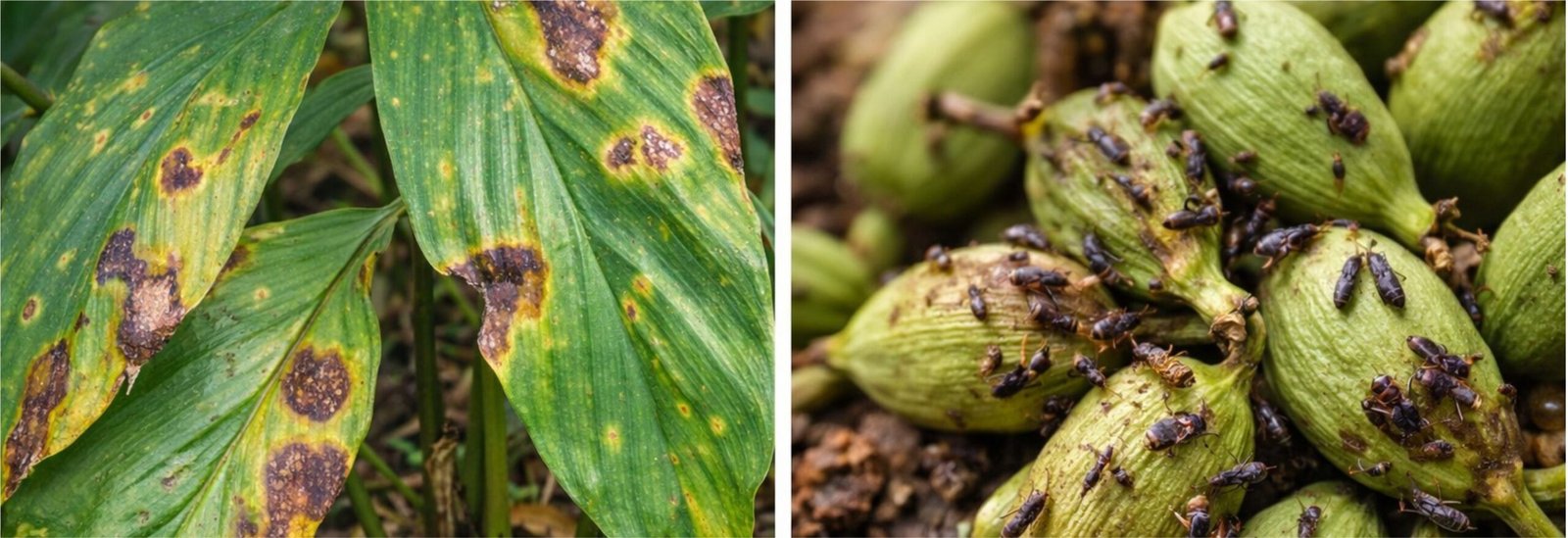
Pests
- Thrips – Fifty-O-5 0.3%
- Mites – BAREEK
- Defoliator – Zyami
- Borers – Madad, DYAFIN
Check early, control on time, otherwise yield loss.
Diseases
- Damping-off – TRICHO-PEP H
- Wilt – CLAUN
- Mosaic – PSEUDO-PEP
- Early Capsule Rot – PEPTILIS
- Capsule Rot – TRICHO-PEP V, TAL M-45
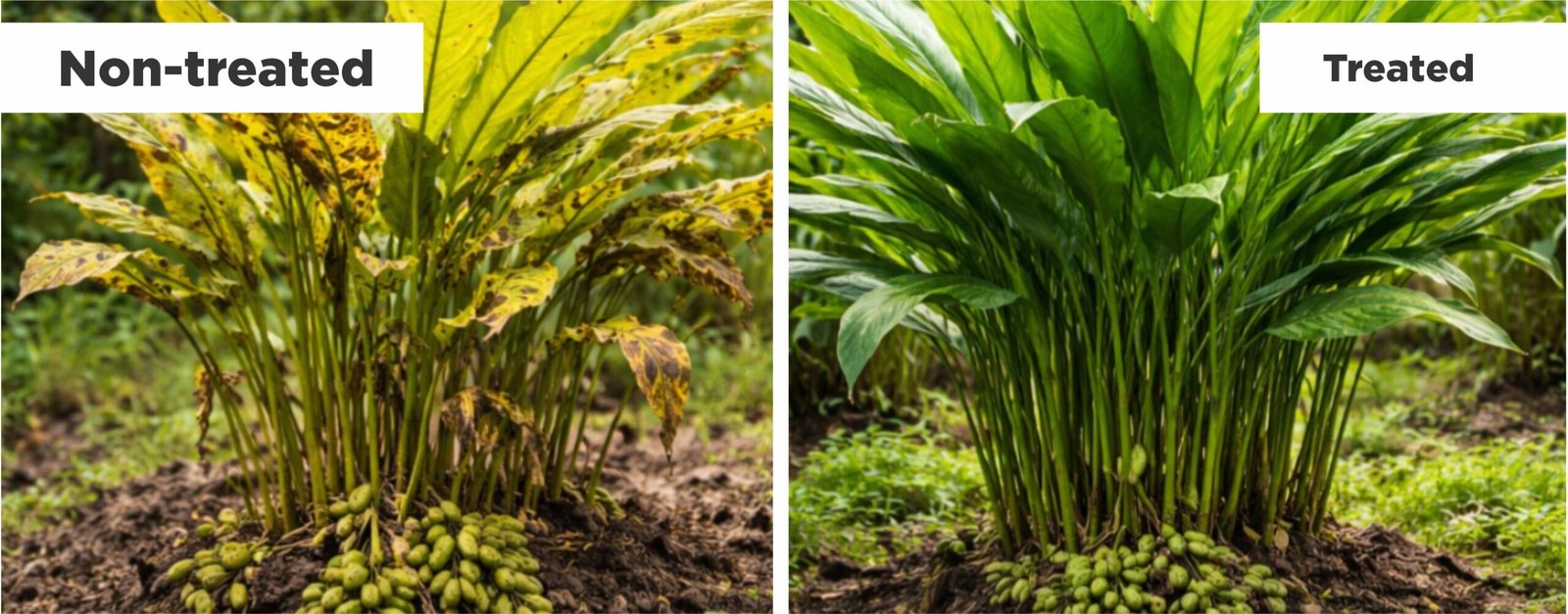
Use a mix of bio and chemical products, keeping plants safe.
Harvest and Drying
First harvest 2–3 years after planting. Pick carefully when capsules yellow, over-matured capsules lose color and price. Dry in shade, keep green color and aroma, get better market value.
Conclusion
Cardamom needs patience and proper care, but gives long term income. Healthy plants, right nutrition, and pest disease control make cardamom farming a reliable crop. Balance of bio and scientific methods make crops safe and good.
.Frequently Asked Questions (FAQs)
- Best place to grow cardamom?
Humid hilly areas with partial shade. - How much water is needed?
Continuous moisture needed, but avoid waterlogging. - When will the first harvest come?
2–3 years after planting. - How to prevent root rot?
Good drainage and TRICHO-PEP V at planting helps. - How to improve quality?
Balanced nutrition, especially potash and microbial inputs.